Mizonofuchi Elementary
5 Centimeters per SecondMizonofuchi Elementary is the rural mountain school at the center of Asuna Watase’s sixth-grade life: a timeworn wooden building that frightens her even as she excels inside it. The contrast between the school’s unsettling physical presence and Asuna’s assured academic standing makes it more than a backdrop; it is the setting for both her place among her classmates and her last day of elementary school.
Setting and Architecture
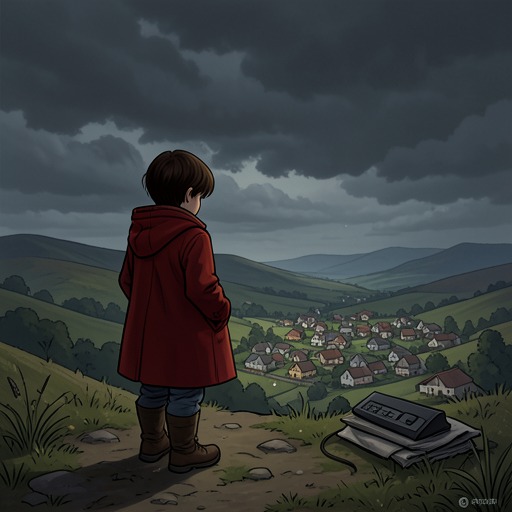
Mizonofuchi Elementary stands in Mizonofuchi, a tiny, deeply rural town in the mountains. The school’s plain name suits the scale of its surroundings. The town is described as so small that it has no need for three elementary schools, or even two; the suggestion is not of a sprawling institution, but of a modest local school whose existence is proportionate to the community around it.
Its building is old timber, said to date from the early thirties. Age gives it a certain dignity, but that dignity does not reassure Asuna. The structure is also described as the sort of place that might look haunted even in daylight. Its floors creak, and Asuna’s fear is immediate enough that she imagines mistaking her reflection in a window for a ghost. The school’s atmosphere is thus presented through a child’s apprehension: its age can signify endurance to an observer, while to Asuna it makes ordinary corridors and windows feel ominous.
That unease is specific to the building, not a sign that the school is actually haunted. The account turns the physical details of an old wooden school into a measure of how intimidating a familiar setting can seem to a pupil. Mizonofuchi Elementary is simultaneously a prosaic village institution and, in Asuna’s perception, a place with a distinctly uncanny presence.
Asuna’s School Life
Asuna is a high achiever at Mizonofuchi Elementary. She takes first place on every test, and her homeroom teacher, Ms. Ikeda, publicly recognizes her strong results. Her success does not make her socially untroubled: classmates who score much lower, sometimes twenty or thirty points, have reason to envy her, and she becomes a target of that jealousy. Academic distinction therefore brings recognition from the teacher but also marks her out among her peers.
The classroom scene establishes an important contrast with Asuna’s fear of the building. She can cross its creaking floor to the platform when her name is called and receive praise at the head of the class, even though the school itself unsettles her. Mizonofuchi Elementary is not simply a place where she performs well; it is where achievement makes her visible, with both approval and resentment following from the same distinction. The ordinary ritual of reading out a pupil’s name and announcing her rank gives that social tension a concrete setting.
The school’s staffing changes during Asuna’s sixth-grade year. When Ms. Ikeda goes on maternity leave, Ryuuji Morisaki arrives as her substitute. The change prompts a small commotion in the class: the boys complain that they have not been given a woman teacher, while the girls judge the new teacher handsome. The episode places a passing shift in adult authority within the everyday social life of the classroom, and shows how quickly the pupils turn a practical change into a subject of collective attention.
Final Day and Narrative Significance
Mizonofuchi Elementary’s role in Asuna’s story culminates on her last day there. She is already wearing the blazer for middle school and has to hurry when called because she is about to be late for her graduation ceremony. The detail makes the transition visible before she has left the school: the new uniform belongs to the next stage, while the day itself remains her final one at the old institution.
That ending gives the school a clear place in the passage from childhood into adolescence. The account does not turn graduation into a large public spectacle; instead, it locates the threshold in a brief domestic exchange and Asuna’s hurried departure. Her time at Mizonofuchi Elementary closes through the simple fact that she will not return as a pupil. The old building that once seemed frightening has also been the setting for her academic standing, her classmates’ reactions, and the routine of sixth grade.
As a location, Mizonofuchi Elementary gathers these contrasting experiences into one small, specific place. Its rural setting and aged wooden structure give Asuna’s school life a distinctive atmosphere; its classroom makes her success and the jealousy it provokes legible; and its final day frames the departure for middle school. The school’s significance lies in that combination: it is an ordinary local institution, but for Asuna it holds the unease, recognition, social friction, and concluding ceremony of a formative year.